How to make up after a small argument
To make up after a small argument, take a short pause until you are both calm, come back to it the same day, name your own part in one sentence, say what you actually needed, and agree on one small next step. Then do something ordinary together to close the moment. Making up is less about settling who was right and more about showing each other that you are still on the same side.
What counts as a small argument
Small arguments are the everyday ones: a sharp tone about the dishes, a misunderstanding about weekend plans, a joke that landed wrong, a late reply that felt like being ignored. They are a normal part of sharing a life. The aim is not to have none of them but to make the way back short and familiar.
Step 1: pause, but say when you will come back
When voices rise, a pause helps more than one more sentence. The pause works when it has an end, so say it out loud: "I want to sort this out. Can we take twenty minutes and come back to it?" A break without a return time can feel like a door closing; a break with one feels like a promise.
Use the pause to calm your body, not to rehearse your case. A short walk, a glass of water, a few slow breaths.
Step 2: come back the same day
Small arguments tend to grow overnight. Coming back within the same day, even briefly, keeps them small. It does not matter who starts. Whoever feels ready first can open with something simple: "Can we try that conversation again?"
Step 3: name your own part in one sentence
Start with what you did, not with what the other person did. Keep it to one sentence and leave out "but":
- "I was short with you when you asked about Saturday. I'm sorry."
- "I made a joke at a moment when you wanted to be taken seriously."
- "I answered from my phone instead of looking at you."
This is not about taking on everything. It is about going first with the piece that is genuinely yours. Often that makes it easier for the other person to do the same.
Step 4: say what you needed
Under most small arguments there is a simple need: to be heard, to have a plan, to rest, to feel noticed. Saying it plainly turns a complaint into information. The well-known "I-statement" idea helps here: describe your experience instead of judging the other person.
- Instead of "You ignore me", try "I felt alone with the plans and wanted us to decide together."
- Instead of "You are so messy", try "I was tired and the kitchen felt like one more job."
Then listen to the other side with the same curiosity. You do not have to agree with every word to understand it.
Step 5: agree on one small next step
Pick something concrete and small, not a rule for life: "Let's check the calendar on Sunday evenings", "If I need quiet after work, I'll say so instead of going silent". One step that you both can actually keep is worth more than a long list.
Step 6: close with something ordinary
Relationship writers sometimes call the little gestures that ease tension "repair attempts": a touch on the arm, a silly face, an offer of tea. After talking, a small shared action signals that the moment is over. Make dinner, finish the episode, go for a walk. The point is to return to normal life together.
What usually makes it longer
- Bringing up older arguments. Stay with today's topic. Older topics can have their own time.
- An apology with a "but". "Sorry, but you…" tends to restart the argument.
- Silence as a message. Needing quiet is fine. Using silence so that the other person suffers is a different thing.
- Keeping score. Who apologised last time does not matter here.
- Expecting instant warmth. Some people need a little time after making up before they feel close again. That is okay.
When it is no longer small
If the same argument keeps returning, if arguments start to feel frightening, or if either of you feels unsafe, this is not a "small argument" anymore and a blog post is not the right tool. A counsellor who works with couples is the right person to talk to. If anyone is in danger, contact local emergency services or a support line in your country.
A closing note
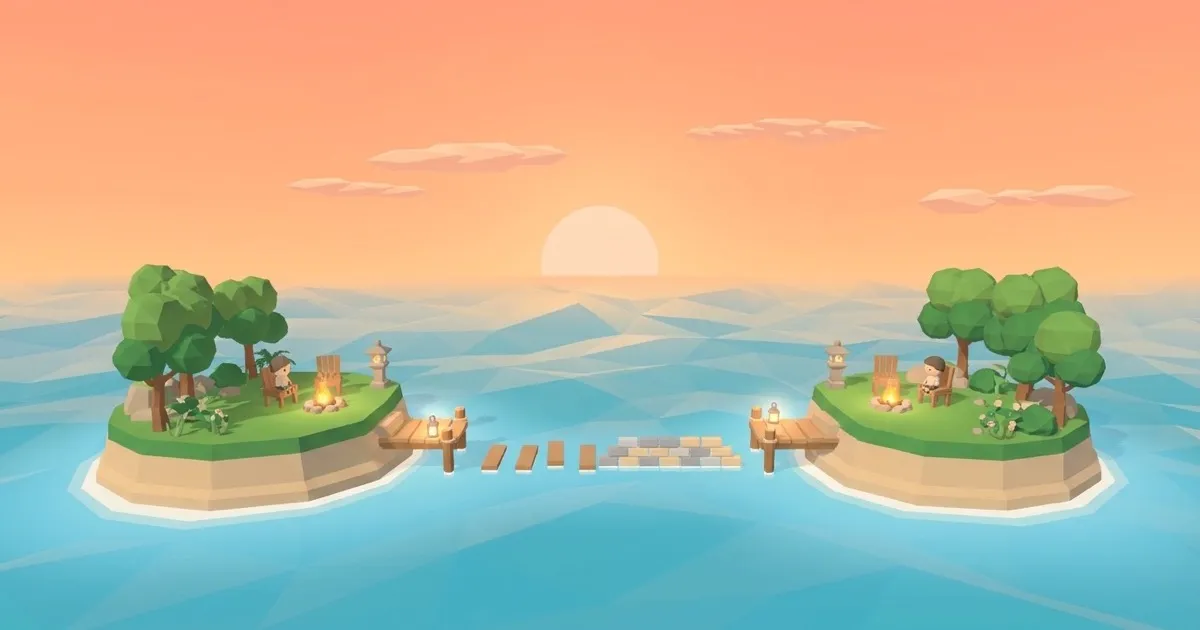
This blog is written by the team behind Two Islands — cozy co-op game for couples. It is a small daily ritual on a shared island, where warm moments lay planks of a bridge and each day ends with a sunset card.